Why Universities Need Advanced Learning Management Systems for Future-Ready Education
Higher education is undergoing one of the biggest transformations in its history. Traditional classrooms are no longer sufficient to meet the expectations of digitally connected students, hybrid learning models, and rapidly changing industry requirements.
Higher education is undergoing one of the biggest transformations in its history. Traditional classrooms are no longer sufficient to meet the expectations of digitally connected students, hybrid learning models, and rapidly changing industry requirements. Universities today are expected to deliver personalized learning experiences, support remote education, track student performance in real time, and prepare graduates with future-ready skills.
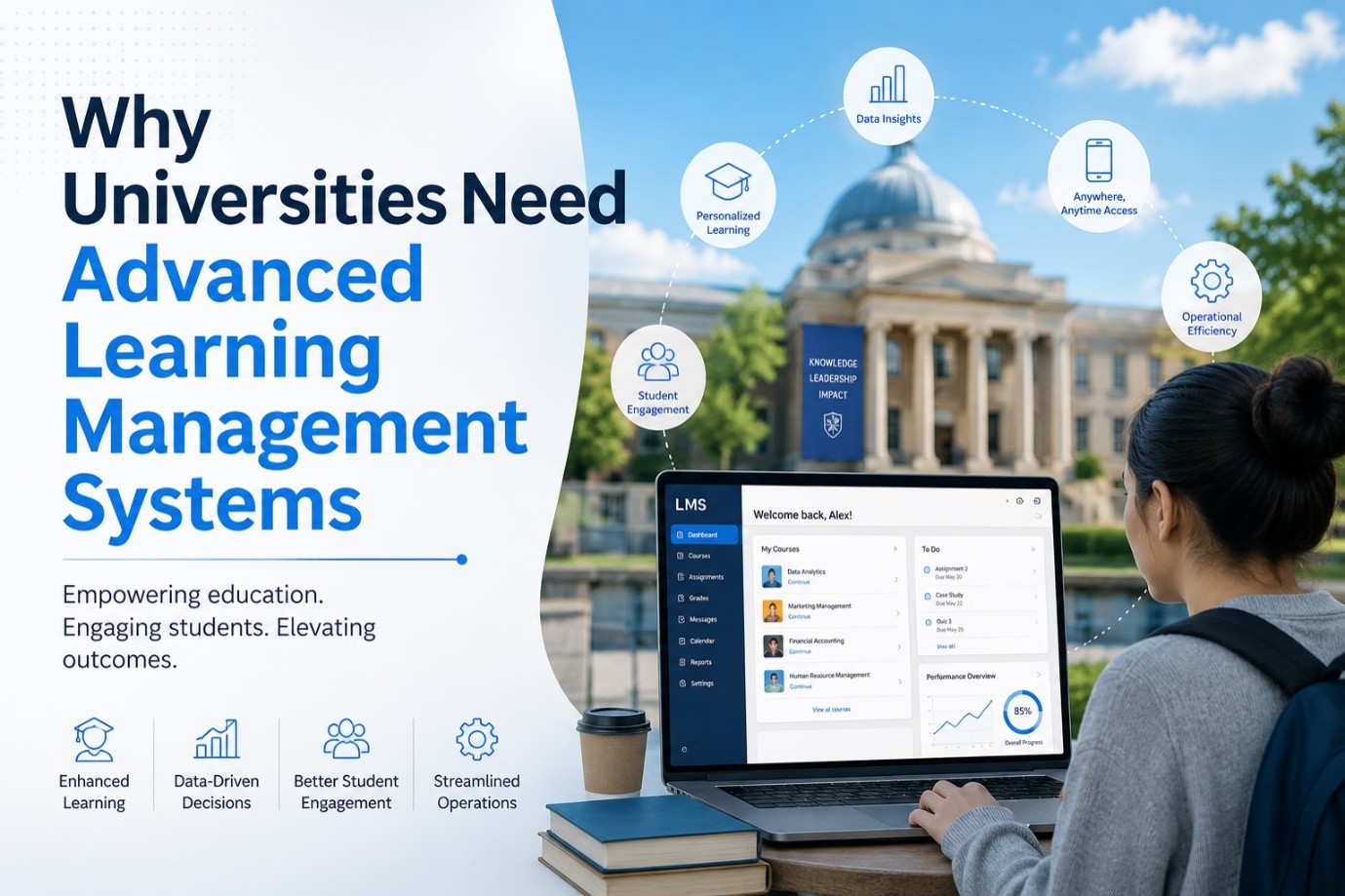
This shift has made an advanced Learning Management System for universities more than just an online teaching platform—it has become the digital backbone of modern education.
An intelligent AI-powered LMS helps universities streamline academic operations, improve collaboration, automate administrative tasks, and create engaging learning experiences. From AI-generated courses and automated assessments to real-time analytics and 24/7 student support, today's LMS platforms are redefining how higher education institutions deliver quality learning at scale.
In this blog, we'll explore why universities are investing in advanced learning management systems, the essential features they should look for, and how the right LMS platform can help institutions remain competitive in an increasingly digital education landscape.
The Digital Transformation of Higher Education
Universities worldwide are embracing digital transformation to create flexible, accessible, and personalized learning environments. Students expect seamless online learning experiences that are available anytime and from any device. Faculty members need intuitive tools to create engaging content, assess performance efficiently, and communicate with students effectively.
An advanced Learning Management System bridges these requirements by centralizing teaching, learning, communication, assessments, and analytics into one unified platform.
Unlike conventional education software, modern LMS platforms are built with artificial intelligence, cloud infrastructure, mobile accessibility, and automation to support both educators and learners.
Why Traditional LMS Platforms Are No Longer Enough
Many universities still rely on outdated learning platforms that lack automation, intelligent insights, and scalability.
Common challenges include:
These limitations impact both learning outcomes and institutional efficiency.
Future-ready universities require platforms that continuously evolve alongside educational technology.
Key Benefits of an Advanced Learning Management System for Universities
1. Personalized Learning Experiences Using Artificial Intelligence
Every student learns differently.
An AI-powered LMS analyzes learning behavior, course progress, quiz performance, and engagement patterns to recommend personalized learning paths.
Benefits include:
This creates a more engaging and effective learning experience.
2. AI-Powered Course Creation Saves Faculty Time
Creating comprehensive digital courses requires significant effort.
Modern universities are adopting an AI-powered course creation tool that automatically assists educators by generating:
This allows faculty to spend more time mentoring students rather than building content manually.
3. Automated Assessments and Faster Evaluation
Manual grading consumes countless faculty hours.
An advanced LMS with an AI auto-grading system can evaluate assignments, quizzes, and objective assessments instantly.
Advantages include:
Combined with an AI quiz generator, educators can also create assessments within minutes.
4. Real-Time Analytics for Smarter Academic Decisions
Universities generate massive amounts of student data.
An LMS with real-time analytics dashboard helps administrators monitor:
These insights support data-driven decisions that improve institutional performance.
5. 24/7 Student Support with AI Chatbots
Today's students expect immediate assistance.
An integrated chatbot tutor for students provides instant answers to academic questions, assignment guidance, navigation support, and learning resources.
With 24/7 student support AI, universities can improve student satisfaction while reducing administrative workload.
6. Flexible Learning Anytime, Anywhere
Modern learners require flexibility.
A responsive LMS platform offers:
Students can continue learning without location or device restrictions.
7. Seamless Integration with Existing University Systems
Technology should simplify operations—not complicate them.
An advanced LMS supports seamless LMS integration for existing systems, including:
This creates a unified digital ecosystem for educational institutions.
8. Scalable Infrastructure for Growing Universities
As institutions expand, their technology must scale effortlessly.
An end-to-end cloud LMS for education institutions supports:
Cloud infrastructure ensures reliability, security, and high performance.
Essential Features Universities Should Look for in an LMS
Before selecting a Learning Management System for universities, institutions should evaluate whether it includes:
AI & Evaluation
Campus Infrastructure
User Experience & Governance
These capabilities ensure long-term scalability and improved learning outcomes.
Why AI Is the Future of University Education
Artificial intelligence is transforming higher education by making learning more personalized, efficient, and measurable.
An AI-First Learning Management System enables universities to:
Automate repetitive tasks
Improve student engagement
Predict learning challenges
Deliver personalized recommendations
Enhance faculty productivity
Increase operational efficiency
Rather than replacing educators, AI empowers them with smarter tools to deliver better education.
How InstructoHub Helps Universities Build Future-Ready Learning Ecosystems
InstructoHub offers an advanced AI-powered LMS designed specifically for modern educational institutions.
Its platform combines intelligent automation, cloud technology, and user-friendly design to help universities create engaging digital learning environments.
Key capabilities include:
AI-powered course creation
AI quiz generation
AI auto-grading system
LMS with real-time analytics dashboard
Responsive eLearning interface
White-label Learning Management System
Multi-tenant Learning Management System
Seamless LMS integration for existing systems
Online campus management system
End-to-end cloud LMS for education institutions
Whether your institution is transitioning to hybrid education or expanding online programs, InstructoHub provides the tools needed to deliver scalable, secure, and future-ready learning experiences.
Conclusion
Universities are no longer evaluating Learning Management Systems solely on their ability to host online courses. They need intelligent platforms that enhance teaching, personalize learning, automate administrative tasks, and provide actionable insights through analytics.
Investing in an advanced Learning Management System for universities is an investment in better student outcomes, improved faculty productivity, and long-term institutional growth. As higher education continues to evolve, AI-powered LMS platforms will play a central role in helping universities remain competitive, innovative, and prepared for the future.